

In our World Cup preview series, we assess each of the tournament favourites featuring Barcelona stars, examining their key strengths and predicting how far they can go in the competition. Previously we covered Brazil and Spain.
The Netherlands enter the World Cup as one of Europe's dark horses, possessing a talented squad capable of troubling any of the tournament favourites on their day.
Their hopes of a deep run will be built on a formidable defensive foundation. Led by Virgil van Dijk, alongside Denzel Dumfries and former Barcelona target Micky van de Ven, the Dutch boast one of the strongest defensive units in the competition, providing both solidity and athleticism across the back line.
The key question will be whether they can consistently turn possession and chances into goals against elite opposition. While they are not viewed in the same bracket as favourites such as France, Brazil and Spain, the Netherlands have the quality, experience and tournament pedigree to reach the latter stages and potentially emerge as surprise contenders for the trophy.
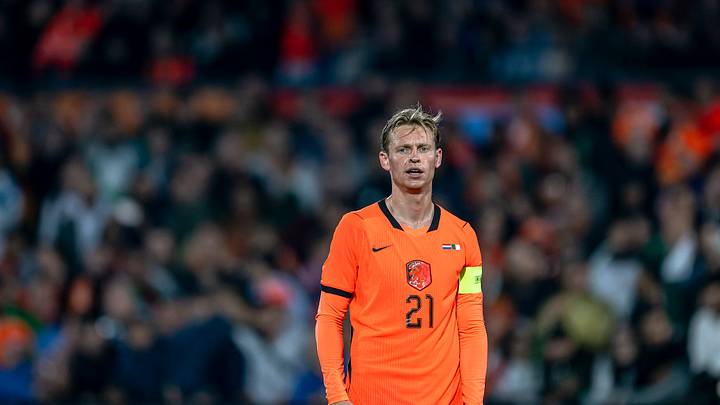
Frenkie is critical to the midfield
The Netherlands have a good wealth of midfield options but there is one player that is ranked above the others for controlling the tempo and fluidity with the national team, something that will be needed for games against Japan and Sweden.
His ability to evade pressure and carry the ball into advanced areas allows the Netherlands to transition quickly from defence to attack while maintaining control of possession. De Jong's intelligence and composure also help bring the best out of those around him, particularly the attacking players who benefit from his creativity and passing range.
De Jong will be optimistic, as am I, about a good performance at the World Cup.
Strong defensive options but limited attacking threat
The Netherlands can rely on one of the strongest defensive units at the tournament, and it would come as a surprise if they concede many goals. Led by Virgil van Dijk and packed with players boasting extensive Premier League experience, the Dutch back line has the quality, leadership and composure to frustrate even the world's best attacks.
The greater concern lies at the other end of the pitch. While the Netherlands possess plenty of attacking talent, they arguably lack a truly elite goalscorer capable of carrying them through the latter stages of the competition. The absence of a recognised No. 9 starring for one of Europe's top Champions League contenders highlights that issue, placing added responsibility on the likes of Noa Lang, Donyell Malen and Memphis Depay to provide the cutting edge needed to turn a promising run into a genuine world champion.
Tough group to win
The Netherlands' fate could be shaped by their opening two matches, which are widely viewed as the toughest tests in Group F. Avoiding defeat in those fixtures would put the Dutch in a strong position to assert their authority and secure top spot.
Japan are regarded by many as one of the tournament's dark horses after a string of impressive performances and notable victories over European heavyweights in the build-up to the World Cup. Sweden, meanwhile, remain something of an enigma. A disappointing qualifying campaign raised doubts about their credentials, but their Nations League form has shown they are capable of competing with anyone. If Viktor Gyökeres and Alexander Isak hit top form, Sweden will pose a serious threat to every team in the group.
Date | Fixture |
|---|---|
Sun 14 Jun, 21:00UTC | Netherlands vs Japan |
Sat 20 Jun, 18:00UTC | Netherlands vs Sweden |
Fri 26 Jun, 00:00UTC | Netherlands |
Chances to win?
An economist with a remarkable record of correctly predicting every World Cup winner has tipped the Netherlands to lift the trophy in 2026, a forecast that has certainly raised a few eyebrows among the tournament favourites. Whether coincidence or not, it has added another layer of intrigue to Ronald Koeman's side as they prepare for a potential deep run in North America.
Topping Group F may not guarantee an easy path, however. The Dutch would likely face the runners-up from Group C in the Round of 32, a position that could easily be occupied by Brazil or Morocco depending on how a fiercely competitive group unfolds. Scotland and Haiti are also capable of causing problems, making the final standings difficult to predict.
Should the Netherlands navigate that hurdle, a quarter-final clash against the runners-up from Group A or Group B could await, a route that appears more favourable on paper. If they fail to win their group, the scenario flips, with Koeman's side facing the respective group winners instead.
There are plenty of permutations still to be decided, but if the Dutch can combine their defensive strength with a little help from football guru economist, they may just emerge as one of the tournament's biggest stories.
 Add us as a preferred source on Google