

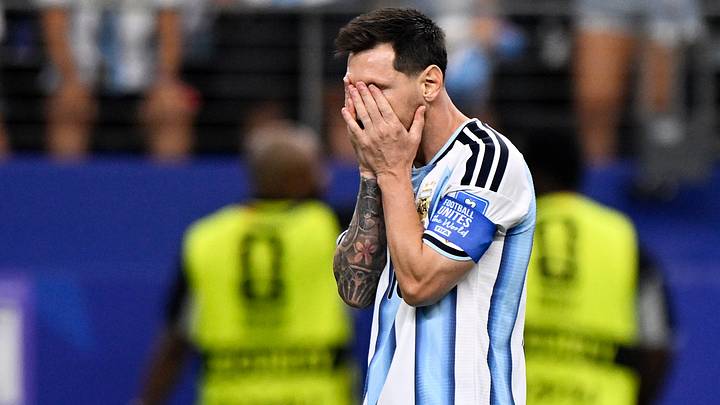
Cristiano Ronaldo's obsession with Lionel Messi has been blown way out of proportion and has reached an unprecedented new level of darkness. Based on explosive reports which are currently being spread on various social platforms, are stating that Cristiano Ronaldo’s media PR camp is actively offering large sports aggregation page sites cash in order to publish biased, unfair coverage including negative narratives, compilations of lowlights, and outright criticism directed at the Argentine.
🚨 | 𝗕𝗥𝗘𝗔𝗞𝗜𝗡𝗚: Reports are circulating that Cristiano Ronaldo’s PR team has been privately messaging major sports media pages, offering paid promotions to push negative narratives against Argentina and Lionel Messi. pic.twitter.com/9DmSfRzBp2
— Tactical Football Review (@TFRHQ5) July 4, 2026
Of course this can either be a well-constructed media campaign or simply fake news generated by fanatical supporters of either side, it confirms what we always knew about modern fans; that our favorite team or sport media outlet is completely broken and is willing to listen to whoever will offer the highest price.
The root of the problem: The "aggregator economy"
To understand why these accusations seem so plausible and believable we must first dissect the structure of sports media today. Forget the traditional idea that football fans only watch full matches reported by accredited journalists who have no bias whatsoever and take the time to conduct a through, fact-checked report for major outlets. Today’s game, is all dictated by major sports aggregate pages which boast an enormous following and operate by no rules. They lack any semblance of editorial judgment or standards and don’t even check if a reported item or piece of media is factually correct before releasing it to their legions of followers.
As it turns out, any sort of negative commentary will bring in much more attention, and a significant portion of the money that will flood their account from those who wish to bring down the reputation of one player or nation can turn an “anonymous” comment on an internet message board into a very powerful force.
An orchestrated, and coordinated attack from a variety of top mega-sites can create an entirely false perception that this narrative is coming directly from the mouths of millions of fans. This exploits tribalism and confirmation bias, turning passive viewers into passionate followers of a narrative they have been meticulously duped into believing.
This narrative is being fed to millions and is paid for by parties who know their bread is buttered. Their brand identity requires this to continue and as their on field production becomes less significant than the past, this will only ramp up.
Why now?
It is hardly a surprise that such rumors are cropping up now. The stark contrast between Messi and Ronaldo is growing.
While Messi is continuosly turning up in big matches and plays for a team that is completely built around him to suit his style of play and facilitate his brilliance. While Ronaldo’s role on the Portugal team has become one that is a source of heated debate, concerning his position and overall worth to the team, particularly at this late stage of his career.
Sports’ most ruthlessly competitive businesses naturally tend to pit “winners” against each other. And when a player’s competitive ability is on the decline, one’s greatest threat becomes the perceived legacy of their greatest rival. The opportunity now to sow seeds of discord via a highly negative smear campaign against one player in order to promote the other would seem to be an opportunity not to pass up by such operations.
Traditional journalism vs modern media: The problem with sports media today.
Why do rumors like these spread and hold water?
Because modern social media aggregate sports news sites are a festering cesspool of unchecked information, and thus incredibly easy to influence by various groups. Whereas traditional sports news outlets are expected to follow reporting guidelines, verify sources and provide fact based reports.
These new aggregators do none of that.
Instead, all they are is an aggregator for anonymous posts or messages, a factless, biased news outlet with all the attention, and influence one can hope for. When these type of accounts are willing to spread unconfirmed, outright false claims about a player for the right price it’s incredibly damaging. We have entered a time where sports media organizations care much less about sports fact and more about clickbait headlines and an increased attention share on the various social media platform.
Reclaiming football discourse
While we obviously can not get rid of malicious actors attempting to sabotage athletes, what we can do, is limit the effectiveness of their propaganda efforts significantly.
- Social media outlets have a moral and legal obligation to ensure that any post promoting any sort of editorial content is properly designated as sponsored. This applies to news pages and so-called reporters in addition to individuals
- Fans must use community guidelines tools such as the community note system to instantly correct misinformation by provide context for doctored content and unverified claims.
- At the end of the day, fans have the final say and is responsible for the content that they consume.
We must refrain from relying on sensationalistic snippets and clips which can often be deliberately deceptive. When we revert back to consuming actual full match reports of sporting events, the false narrative of a paid or biased story quickly collapses under the weight of objective reality.
Lionel Messi and Cristiano Ronaldo have entertained millions and been a topic of the greatest and most celebrated rivalry of all-time. That legacy shouldn’t be marred or tarnished by the back-channel dirty tricks of modern online media organizations and the fan-base that drives it.
 Add us as a preferred source on Google