

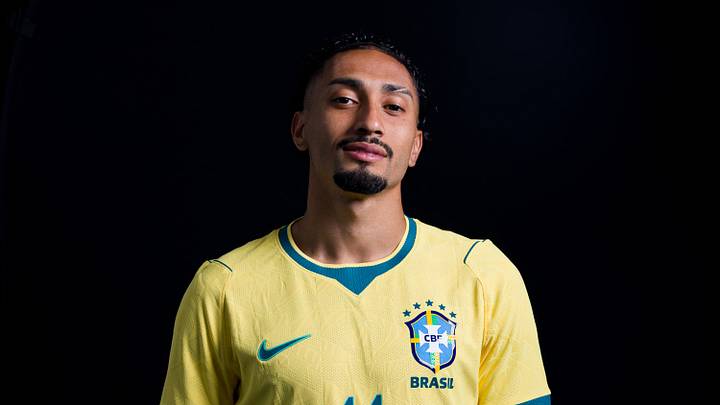
You know the World Cup is truly underway when Brazil take to the pitch, bringing their trademark flair and entertainment for football fans around the globe. This fixture also marks the first opportunity to watch a Barcelona representative in action, and it promises to be a fascinating encounter.
Brazil face Morocco at the MetLife Stadium in what many expect to be a battle between the two strongest teams in the group. On paper, both nations appear well placed to secure automatic qualification to the knockout stages, making this opening clash particularly significant.
Morocco will arrive full of confidence after their historic run at the last World Cup, where they famously eliminated Spain, and following their impressive run to the Africa Cup of Nations final earlier this year. Mohamed Ouahbi's side boasts plenty of quality, with Achraf Hakimi, Brahim Díaz and Bilal El Khannouss among the standout names expected to feature.
So in the first of the predicted line-up series, we look at how Brazil will line up for tomorrow’s fixture, and where Raphinha starts for Seleção at the World Cup.
Brazil predicted starting XI
Goalkeeper: Alisson
Alisson enters the tournament as Brazil's first-choice goalkeeper, holding off competition from Ederson and Weverton for the number one spot. The Liverpool shot-stopper remains one of the world's best, however the concern is his match sharpness after an injury-disrupted season at Anfield.
Right back: Danilo
The veteran right back, who now plays for Flamengo, will likely be the starter following Wesley injury and withdrawal.
Centre Back: Marquinhos
The captain needs no introduction. The two-time Champions League winner will want to add more gold to his collection.
Centre Back: Gabriel Magalhães
Arsenal's Player of the Season will be eager to put his Champions League penalty disappointment behind him and make a strong start to the World Cup. A commanding presence at the heart of Brazil's defence, he brings leadership, composure and defensive solidity to a team that already boasts a formidable spine.
Left Back: Alex Sandro
Another Flamengo veteran, he is expected to play a more reserved role given Morocco's threat out wide and Vinícius Júnior's limited defensive contributions.
Centre midfield: Casemiro
He is expected to operate on the left side of the deeper midfield pairing to provide additional defensive stability. As he has shown with Manchester United, he also poses a significant threat from set-pieces and runs the risk of yellow cards early in the game.
Centre midfield: Bruno Guimaraes
The former Barcelona target provides the ideal balance between defensive discipline and attacking intent, giving Brazil greater control and versatility in midfield.
Attacking midifeld: Matheus Cunha
Matheus Cunha is at his best operating just behind the striker, where he can exploit space and link play. The Manchester United forward is expected to drift across the attacking line, bringing creativity and unpredictability to Brazil's attack. He has all the attributes to enjoy an outstanding tournament.
Right wing: Raphinha
Raphinha is set to start on the right wing, a role he rarely gets to enjoy at Barcelona since Lamine Yamal's emergence. Back in his favourite position for Brazil, don't be surprised if he finishes as the Seleção's top scorer and best player.
Left Wing: Vinicius Junior
Love him or hate him, the Real Madrid star will be eager to put a disappointing club season behind him and shine for Brazil on the biggest stage. However, if he fails to deliver the level Carlo Ancelotti expects, the likes of Rayan and Neymar Jr. will be ready to challenge for his place in the starting XI.
Centre Forward: Igor Thiago
R9, Adriano, Romário and Pelé are in a different stratosphere to Igor Thiago, but he offers a different profile that can still benefit Brazil’s attack. His physical presence and work rate allow the more technical attackers around him to flourish and complement his style of play.
Often underrated, he brings balance and structure to the forward line, and it is clear Carlo Ancelotti trusts him to play a key role in the system.
 Add us as a preferred source on Google